What Circus Arts Taught Researchers About Physical Literacy
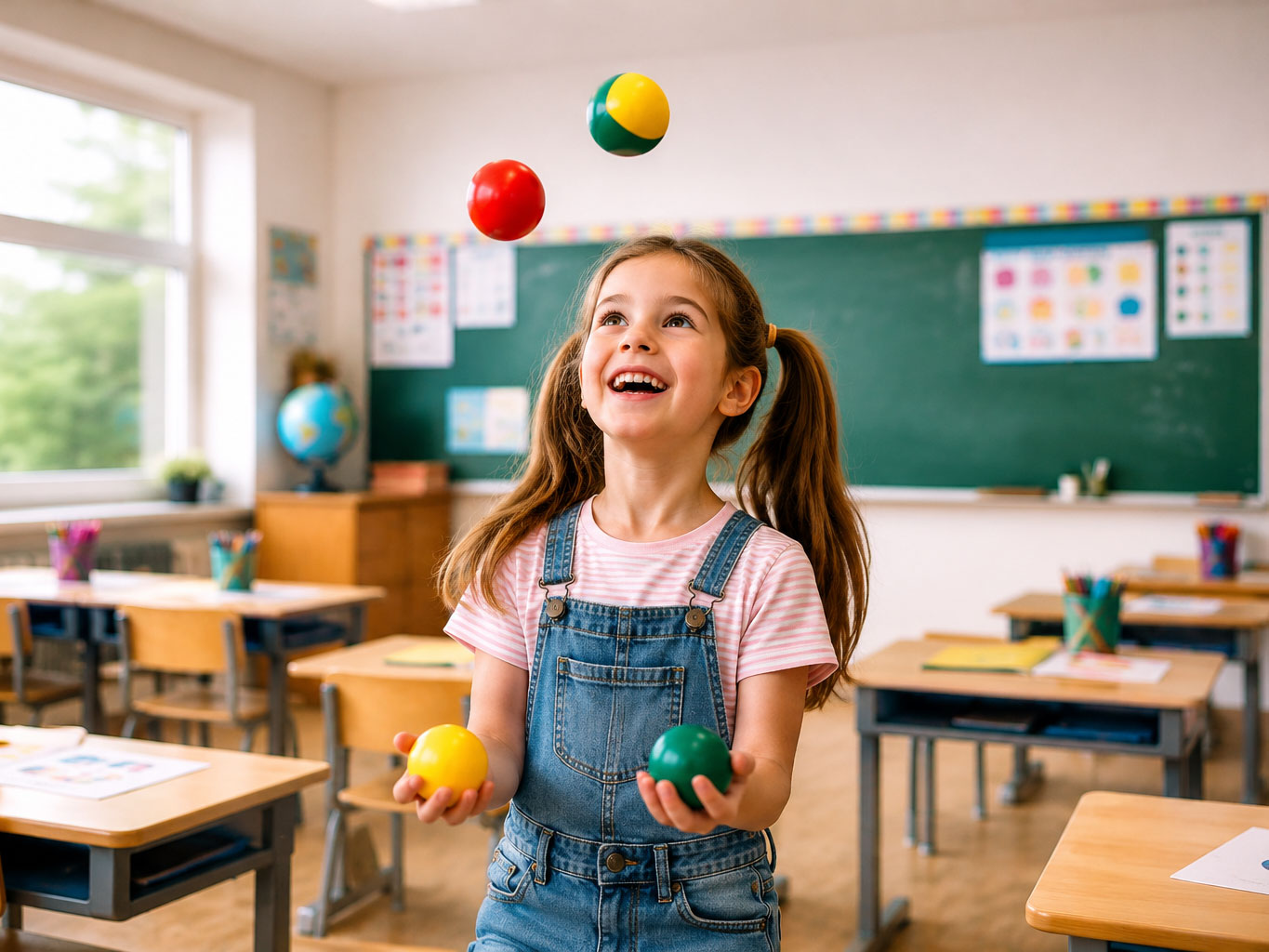
A group of kids in Montreal spent their physical education classes learning to juggle, swing on a trapeze, and balance on a rola bola, rather than the usual gym activities. The program was run in partnership with the National Circus School in Montreal. At the end of one semester, researchers assessed their skills, not their circus skills, but the fundamental movement skills you’d expect any physical education class to develop: running, throwing, balancing, and coordination.
The circus kids outperformed the standard physical education group. Grade 5 students in the circus program scored higher on 15 of 18 movement skills. Grade 4 students scored higher on 7 of 18. And it went beyond physical competence. Circus students also showed greater confidence, better comprehension of movement terminology, and increased participation in physical activities outside of circus.
That’s the transfer effect, and it matters for everyone working in physical literacy.
What Happened in the Study
The research team included Dr. Dean Kriellaars alongside Dr. John Cairney, Dr. Marco Bortoleto, Tia K.M. Kiez, Dr. Dean Dudley, and Patrice Aubertin. The study was conducted in partnership with the National Circus School in Montreal and published in the Journal of Teaching in Physical Education in 2019.
Comparing children in Grades 4 and 5 from French publicly funded schools near Montreal, the researchers matched two groups of schools by socioeconomic status. One group of 101 children received circus arts instruction in physical education; the other 110 received the standard physical education curriculum.
Circus activities included juggling, rola bola, diabolo, trapeze, flower sticks, and more. Standard physical education schools followed the same schedule with their regular curriculum.
To measure outcomes, the research team used three of Sport for Life’s Physical Literacy Assessment for Youth (PLAY) Tools: PLAYfun, PLAYself, and PLAYinventory, capturing data from trained assessors and the children themselves.
Both groups improved their motor competence over the semester, but the circus group improved significantly more. The gender gap in motor competence was also smaller in the circus schools, with particular benefits for girls, likely due to the inclusive and participatory nature of circus, where activities and the learning environment differ from those in traditional sport.
Why This Matters for Physical Literacy
Physical literacy is the motivation, confidence, physical competence, knowledge and understanding to value and take responsibility for engagement in physical activities for life. This research shows that the type of movement experience matters as much as the amount.
Most physical literacy programs still focus on sport-based delivery. That’s an important foundation, but it’s not the only path, and it may not be enough on its own. Circus arts hit elements that traditional sport often misses.
Participants learn to perform for an audience, not just in front of one. They develop creativity, expression, risk-taking, trust, and perseverance alongside physical skills. The activities are novel enough that nearly all children start on equal footing, with no advantage from years of hockey or soccer, which means confidence builds differently.
This aligns directly with what Long-Term Development in Sport and Physical Activity tells us: diverse movement experiences build a stronger foundation of physical literacy. Early specialization narrows the range. Broad, rich, varied movement expands it.